Skip to Content

T-cell dependent antigens
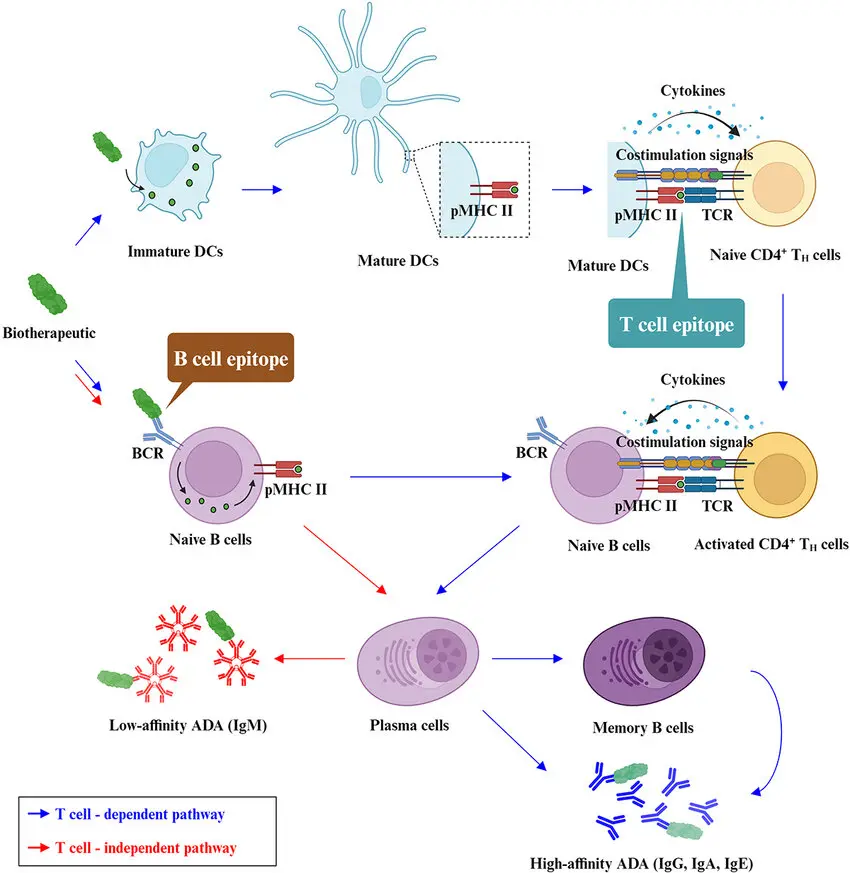

Antigen Recognition & Processing: The process begins when a B cell uses its surface receptors to bind to a specific antigen (like a piece of a virus or bacteria). The B cell "swallows" this antigen, breaks it down into smaller peptide fragments, and then displays these fragments on its surface using a specialized protein called MHC Class II.  The T-Cell Handshake (Signal 1): A matching Helper T cell (specifically one with a T-cell receptor or TCR that fits the antigen) comes along and binds to the MHC-antigen complex on the B cell. This is the "first signal" that confirms the B cell has found a legitimate threat.  Co-stimulation (Signal 2): To prevent accidental activation, a second "physical handshake" is required. The T cell expresses a protein called CD40L, which plugs into a receptor on the B cell called CD40. This interaction is the "green light" for the B cell to start its transformation.  Cytokine Messaging: Once the physical contact is made, the T cell releases chemical messengers called cytokines (such as IL-4 and IL-21). These chemicals act like fuel, instructing the B cell to multiply rapidly.  The Result: High-Quality Defense: Thanks to this T-cell help, the B cell doesn't just make basic antibodies. It undergoes:  Class Switching: Changing from basic IgM antibodies to more powerful types like IgG (for blood defense) or IgA (for mucosal defense).  Memory Generation: Creating Memory B cells that stay in your body for years, ensuring you don't get sick from the same germ twice.  Affinity Maturation: Fine-tuning the antibodies to make them even "stickier" and more effective at neutralizing the threat.

The Step-by-Step Process

  1. Antigen Recognition & Processing: 

  2. The process begins when a B cell uses its surface receptors to bind to a specific antigen (like a piece of a virus or bacteria). The B cell "swallows" this antigen, breaks it down into smaller peptide fragments, and then displays these fragments on its surface using a specialized protein called MHC Class II.

  3. The T-Cell Handshake (Signal 1): 

  4. A matching Helper T cell (specifically one with a T-cell receptor or TCR that fits the antigen) comes along and binds to the MHC-antigen complex on the B cell. This is the "first signal" that confirms the B cell has found a legitimate threat.

  5. Co-stimulation (Signal 2): 

  6. To prevent accidental activation, a second "physical handshake" is required. The T cell expresses a protein called CD40L, which plugs into a receptor on the B cell called CD40. This interaction is the "green light" for the B cell to start its transformation.

  7. Cytokine Messaging: 

  8. Once the physical contact is made, the T cell releases chemical messengers called cytokines (such as IL-4 and IL-21). These chemicals act like fuel, instructing the B cell to multiply rapidly.

  9. The Result: High-Quality Defense: 

  10. Thanks to this T-cell help, the B cell doesn't just make basic antibodies. It undergoes:

    • Class Switching: Changing from basic IgM antibodies to more powerful types like IgG (for blood defense) or IgA (for mucosal defense).

    • Memory Generation: Creating Memory B cells that stay in your body for years, ensuring you don't get sick from the same germ twice.

    • Affinity Maturation: Fine-tuning the antibodies to make them even "stickier" and more effective at neutralizing the threat.